Barnaby discovers Singapore
One Nation's Barnaby Joyce is suddenly a spruiker for Singapore's economic miracle. As usual he needs to read the fine print.
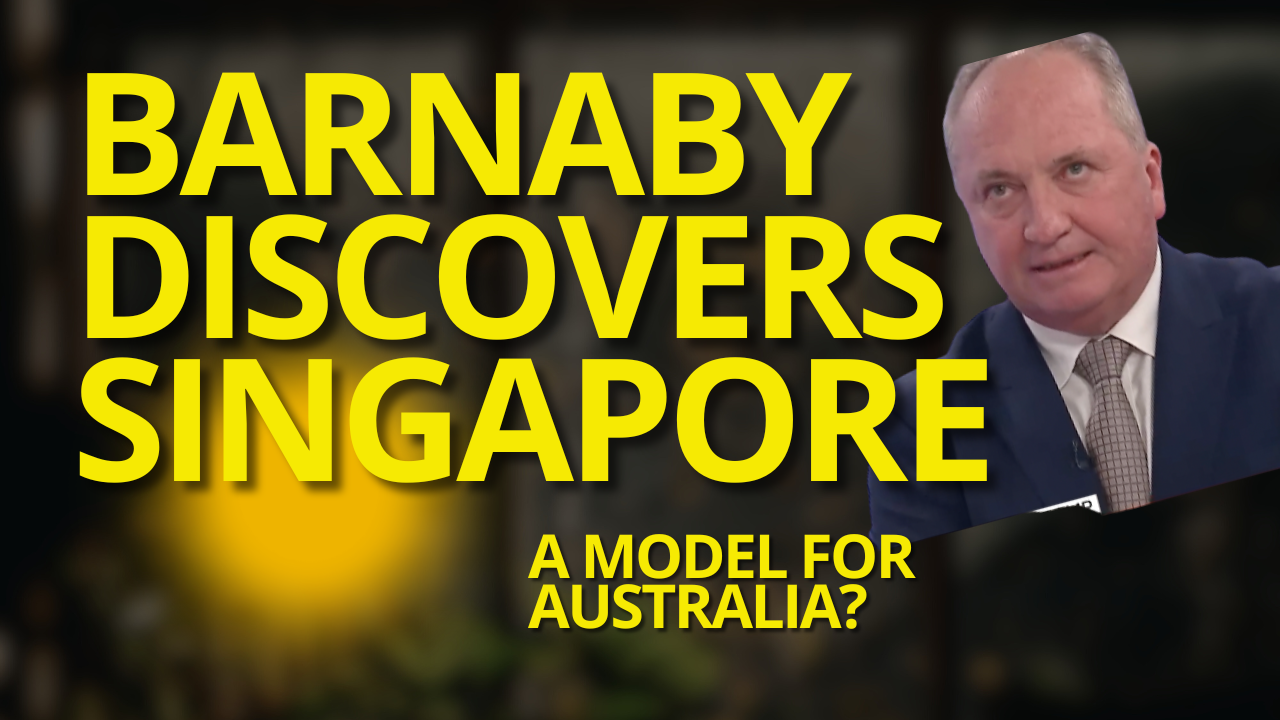
While celebrating One Nation's victory in Farrer at the weekend, Barnaby Joyce has been spruiking for Singapore's five decade economic miracle. He may not like the fine print.
Barnaby Joyce’s media performances this week have had an unexpected theme. Jubilant at One Nation's Farrer win, Barnaby is suddenly a spruiker for Singapore. He felt the need to reference the Singapore miracle across multiple media performances across his favourite channels.
Turns out, I agree with Barnaby - possibly for the first time in my life.
Singapore is a miracle. And it’s worth looking at how the miracle happened.
Check out our YouTube video and catch Barnaby in action
In the 1960s Singapore was poorer than most of its region and plagued by ethnic violence. It reluctantly gained independence in 1965 and it's been hard at work building its prosperity since then.
In 2026, by many measures, it’s the richest nation on the planet. It’s easily the richest place in the Asia Pacific - way ahead of Australia at number 2.
Barnaby’s impressed by Singapore’s miracle but I doubt he’s read the fine print.
He’d be horrified by most of its best bits.
Singapore’s staggering economic transformation was driven by a highly interventionist government. It’s been rigidly directed from the top and involves massive government investment vehicles and mandated payments for health and housing that don't make it into official taxation data. It's something like Australia's compulsory superannuation but much bigger. Sure, big banks and big business get a warm welcome and love the low taxes. But Singapore’s reality is far more textured and interesting.
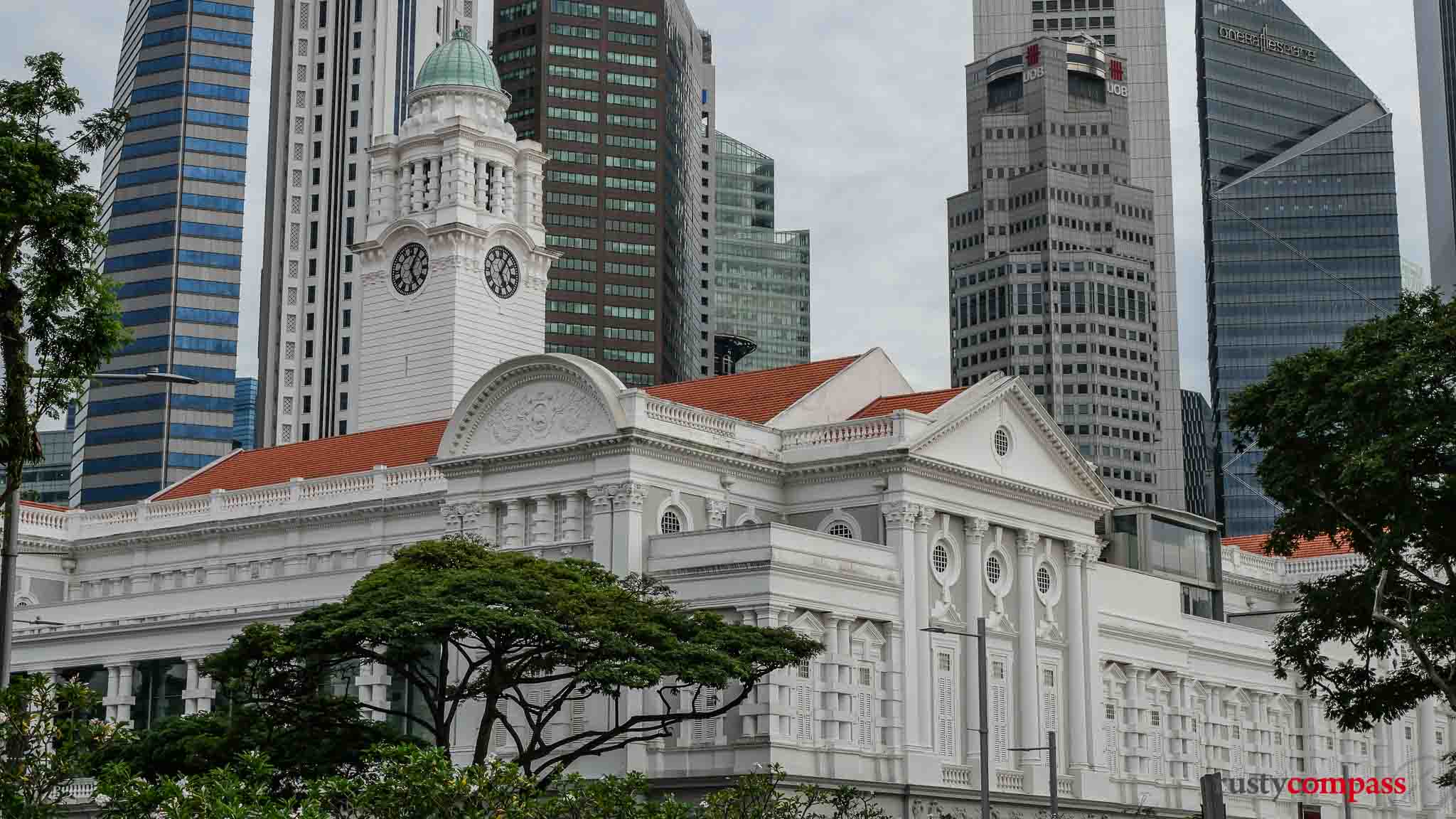
Singapore offers a quasi-socialist housing system underpinned by a fair amount of social engineering. Among other things, it means that even the poorest Singaporeans aren’t likely to face the kind of housing precarity that’s common in Australia. More than 70% of Singaporeans still live in HDB (Housing Development Board) flats - built by the government and purchased by tenants under a complex subsidy system.
Singapore’s health and education systems beat Australia’s by most measures.
Singapore’s great free-market ambassadors in Australia make a lot of the country’s low tax rates - and they’re for real.
But Singapore's new One Nation BFF, probably hasn't seen the compulsory levies on individuals and companies. It's certain he hasn't noticed that one of his beloved massive gas guzzling utes, like a RAM 1500, would cost him A$330,000–$415,000 to take out on the road in Singapore - more than twice cost in Australia. There are heavy road-user charges too.
Barnaby's fondness for a quiet drink would hit the wallet hard too.
Teaching is considered a prestige job in Singapore. Pay is comparable to Australia but the benefits are significant in housing and healthcare. Respect for education and the teaching profession runs deep in the culture.
The likely deal-breaker for Barnaby will be the island's fierce defence of science - including the scientific reality of human-induced climate change. Sure, it’s gonna be complicated achieving net zero on a tiny island. But Singapore’s is a fact-based government. They even introduced Asia’s first carbon tax.
Singapore has one more important lesson too. The tiny exposed island is relatively candid about its existential geopolitical challenges. Singapore shares Australia’s dilemmas - deep historical relations with the United States as a guarantor of regional stability and a deep economic dependence on China and awareness of China's growing regional assertiveness.
Unlike Australia’s political leaders, Singaporean Prime Minister Lawrence Wong and many of his colleagues articulate their country’s Trump-era challenges far more eloquently than any senior Australian politician.
Barnaby’s One Nation is openly MAGA and doesn’t register any concerns about the harm Trumpian lunacy is creating for Australia and our region.
Barnaby might need to head north for a proper lesson on what made resource-poor Singapore so rich so quickly.